
Email: ipexinfrastructures@gmail.com

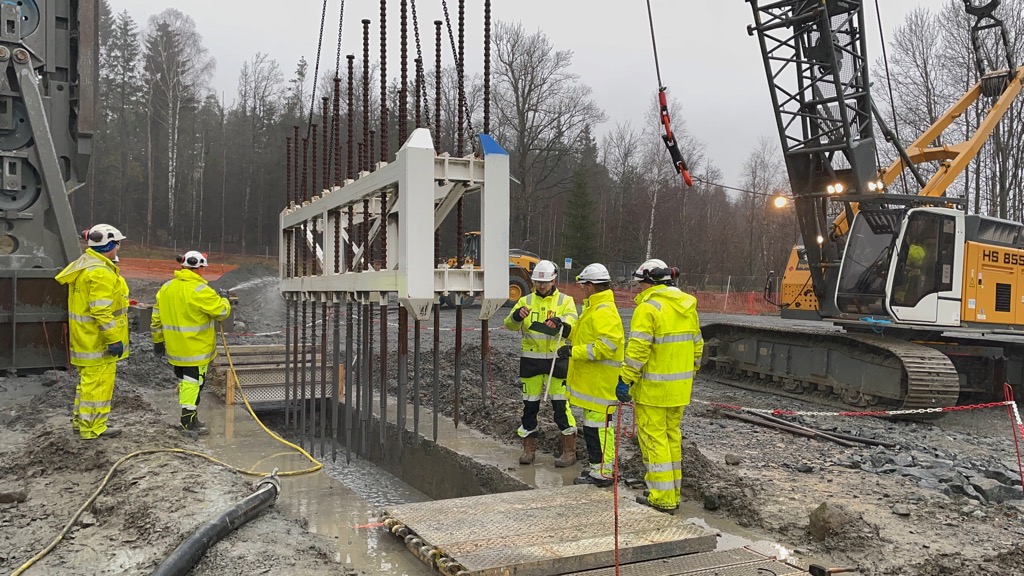
Diaphragm Wall
Diaphragm walls are one of the most effective shoring solutions used to provide rigid structural support for deep excavations. They offer superior verticality control and excellent water tightness compared to other conventional shoring methods, making them ideal for complex underground construction projects.
Construction Method
A diaphragm wall is constructed using reinforced concrete panels excavated with specialized equipment such as hydraulic grabs or cutters (hydro mills). These panels are formed in sequence to create a continuous and strong retaining structure.
Panel dimensions are flexible depending on project requirements, typically ranging from 2.5 meters to 7 meters in length, with thickness varying between 0.6 meters and 1.2 meters.
Key Features
Diaphragm walls provide high structural strength, durability, and water resistance. The use of bentonite or polymer slurry during excavation ensures trench stability and reduces the risk of collapse.
Our advanced machinery enables drilling through difficult soil conditions and even rock, achieving depths of up to 70 meters. The incorporation of stop ends with water bars ensures tight joints between panels, minimizing leakage during and after construction.
Execution Process
The construction process begins with guide wall installation to maintain alignment and support excavation activities. Trenching is then carried out using support fluids, followed by cleaning and preparation of the panel.
Reinforcement cages are carefully lowered into the trench, and concrete is placed using tremie methods to ensure uniform filling. Adjacent panels are then constructed to complete the wall system, ensuring continuity and structural integrity.
Applications
To enhance stability during excavation, diaphragm walls are often supported with tie-back anchors or other lateral support systems, ensuring safety throughout construction
Our Services
Provides structural support ensuring stability during deep excavation and construction
Contact Info
- +91 9891411511 / 011 47009142
- ipexinfrastructures@gmail.com